
What Quartz Countertops Are Really Worth at Resale (and Why Buyers Care)
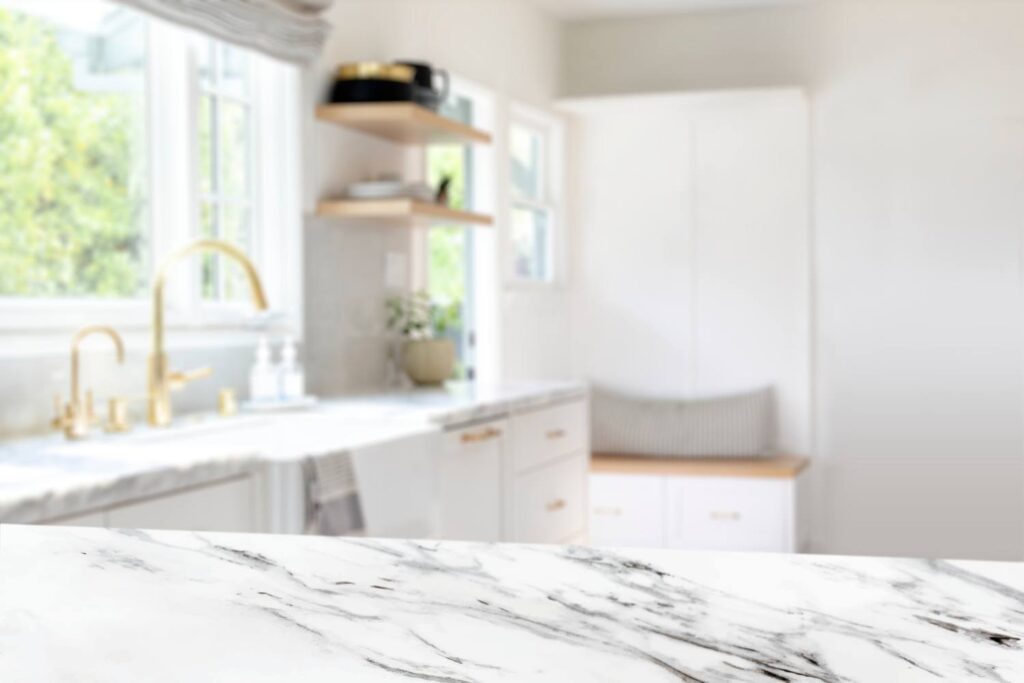
Will swapping out tired laminate or worn tile for engineered stone actually pay back when you sell? In most Metro Atlanta neighborhoods, yes, though the math is rarely as tidy as the magazines make it sound. Homes featuring quartz countertops often fetch higher resale values, especially when the kitchen is otherwise dated, and the surface fits the rest of the house.
The catch is that countertops alone don’t carry an entire listing. They are one piece of a larger story buyers tell themselves when they walk in. A polished surface in a kitchen with worn cabinetry can actually highlight what hasn’t been touched. So, before getting into the percentages and buyer psychology, it helps to understand what the upgrade is really doing for your home’s appeal.
Three things tend to happen when you put in new engineered stone:
- Buyers register the kitchen as recently updated, even if cabinets and floors are older
- The mental “renovation to-do list” gets shorter, which often translates to faster offers
- Photos in the listing pull more clicks because polished surfaces photograph well
That third point matters more than people realize. Most buyers form a strong opinion of a house before they ever step inside.
What the Numbers Actually Say About ROI
Let’s get into the research, since percentages are often used carelessly in this space. The 2025 Cost vs. Value Report from Zonda, in collaboration with Remodeling Magazine and JLC, lists the minor kitchen refresh as one of the highest-returning interior projects in the country.
According to Zonda’s national data, a minor kitchen refresh, which includes new countertops, refaced cabinets, an updated sink, and a few appliance swaps, currently returns around 113% of project cost at resale. It’s one of the few interior improvements that recoup more than they cost. That sounds extraordinary, and it is, but the minor designation is doing heavy lifting. A full gut renovation with upscale finishes typically returns somewhere between 30% and 50%, depending on local market conditions.
In other words, a quartz countertop can increase resale appeal more efficiently as part of a focused refresh than as part of a sprawling overhaul. The smaller the scope, the better the return per dollar tends to look.
A few caveats worth flagging. National ROI averages mask huge regional variation. Atlanta’s Pacific-adjacent ROI markers and Sunbelt growth patterns generally favor cosmetic kitchen updates more than slower-growth regions. And these figures assume the work is professionally executed; a sloppy seam or a mismatched edge profile can erase the gain.
When Quartz Helps Most
In our experience, the upgrade pays back hardest under a specific set of conditions:
- The existing counters are tile, laminate, or builder-grade granite from the 2000s
- The home sits in a competitive price band where most comparable listings already have stone
- The buyer pool skews toward families or professionals who value low maintenance
- The kitchen layout itself is functional and doesn’t need to be reworked
When It Doesn’t
There are scenarios where a fresh surface barely moves the needle. A buyer eyeing a teardown isn’t paying extra for new countertops. Neither is a buyer who plans to gut and reconfigure. In those cases, the surface upgrade may not significantly increase your appraised home value. Spending on quartz right before listing can also backfire when the rest of the kitchen feels mismatched.
A Quick Comparison: Quartz Versus the Alternatives
Different stone types pull different buyers. No surface is universally “better” for resale, and what works in a $400k home in Sandy Springs is rarely what works in a $1.5M build in Buckhead. Here’s a practical look at how the main options stack up from a resale standpoint:
Material | Resale Appeal | Maintenance | Best For |
Quartz (engineered) | Strong in mid-range and family homes | Non-porous, no sealing | Move-in ready listings |
Granite | Steady; classic favorite | Periodic sealing depending on the slab | Traditional kitchens, broad buyer pools |
Quartzite (natural) | Rising in the luxury tier | Sealing required | Higher-end listings, statement spaces |
Marble | Polarizing; loved in luxury | Etching and staining risk | High-end kitchens, secondary spaces |
Porcelain (sintered) | Niche; growing | Very low | Modern designs, outdoor kitchens |
Soapstone | Specialized appeal | Naturally non-porous, oil for aesthetics | Farmhouse, period, or character homes |
Note that quartz and quartzite are often confused, and they shouldn’t be. Quartzite is a natural metamorphic rock pulled from quarries. Quartz, by contrast, is engineered, roughly 90 to 95 percent of which is ground natural quartz combined with polymer resins and pigments. Both have their place, but they perform and behave differently. A buyer who specifically wants natural stone won’t be satisfied with engineered, and vice versa.
What Buyers Actually Want in 2026
Style cycles matter more than most homeowners think. A surface that screams “2010” can date an entire kitchen.
Color Trends Heading Into 2026 and Beyond
Designers and trend forecasters have been calling 2026 the year of warmth in the kitchen. Cool grays, which dominated through the late 2010s, are losing ground. According to recent reporting in Homes & Gardens, interior designer Artem Kropovinsky says light and creamy stones, soft beige, and warm quartz will dominate, alongside subtle patterns with an organic feel rather than loud or overwhelming veining.
Some specifics worth knowing if you’re choosing a slab with resale in mind:
- Soft whites with warm veining are replacing stark, sterile whites
- Calacatta-style patterns with gold or taupe movement remain in heavy demand
- Warm grays and mushroom tones are pulling buyers who want neutral but not cold
- Taj Mahal-inspired looks, both in natural quartzite and quartz versions, have surged
- Honed and leathered finishes are gaining ground over high-gloss polish
What to Avoid
Trend-chasing can hurt resale just as easily as it can help. Loud, bold colors, sparkly aggregates, and dated speckled patterns are exactly the kind of decisions that limit your buyer pool. The safest bet for buyer appeal is a neutral palette with subtle movement that complements rather than competes with surrounding cabinetry.
Why Is Quartz on the Decline in Some Conversations?
This question comes up more often than it used to, and it’s worth addressing honestly. Engineered stone is facing real scrutiny over occupational silicosis among fabrication workers. Australia banned engineered stone in 2024, and U.S. manufacturers, including Caesarstone and Cosentino, began introducing low-silica formulations in 2025. Some designers have started steering high-end clients toward natural stone partly for this reason. That said, quartz still dominates new countertop installations in the U.S. market, and most buyers don’t factor manufacturing health concerns into their purchase decisions.
For homeowners, the takeaway is simple: choose a fabricator that follows wet-cutting and respiratory safety standards, and you can install quartz with confidence. The right quartz countertops installation, handled by an experienced fabricator, removes the worker-safety question entirely from the finished product in your home.
The Atlanta Factor: Local Patterns We See
Working with Metro Atlanta homeowners for over two decades, a few regional patterns stand out.
Atlanta buyers care a lot about the kitchen. It’s the single most scrutinized room during showings, more so than in some other markets. Homes in Brookhaven, Decatur, Roswell, and Alpharetta with updated kitchens routinely move faster, and we hear from local agents that the kitchen is the deciding factor in more transactions than any other room.
Climate is a real consideration here. Atlanta’s summer humidity makes non-porous surfaces especially appealing. Quartz handles humidity better than some natural stones that require ongoing sealing, which is part of why it has held its share of this market.
Buyer tastes lean classic. Atlanta is not San Francisco. Loud, ultra-modern slabs sometimes work in newer builds in the perimeter, but the broader market favors timeless, neutral selections. A buyer touring a 1990s ranch in Marietta wants to feel like the kitchen has been thoughtfully updated, not transformed into something unrecognizable.
If your home is in one of our service areas across Metro Atlanta and Georgia, local comparable listings tell you a lot about what buyers in your neighborhood expect. A walk through a few recently sold homes in your price band is genuinely useful research before choosing materials.
How Much Surface Area Are We Talking About?
A common question that comes up during quote conversations: how much would 20 feet of quartz countertop cost? The honest answer is that costs vary by slab choice, edge detail, cutout count, and installation complexity. A simple eased edge with one standard sink cutout is a different project from a waterfall island with a farmhouse sink and multiple electrical cutouts. Linear-foot estimates also don’t account for whether your existing cabinets need leveling or reinforcement before installation.
Anyone giving you a precise figure without seeing the project hasn’t done the math yet. The smarter approach is to get a measured quote based on your actual layout, with the slab and edge profile selected. We’d rather give you accurate numbers than guess.
Why Some Counter Choices Pay Back Better
A few habits separate the homeowners who maximize their ROI from the ones who break even or worse:
- Pick a surface that matches the home’s price tier. A $200/sf premium slab in a starter home doesn’t return value; neither does builder-grade quartz in a luxury build.
- Keep colors and patterns broadly appealing. Save the bold personality choices for the powder room.
- Pair upgrades thoughtfully. A new countertop next to dated cabinets and old hardware can highlight everything you didn’t touch.
- Choose a fabricator with strong references. Seams, overhangs, and edge details are where amateur installations fall apart.
A nicely staged kitchen is a strong selling point on its own. Adding high-quality quartz countertops in that context tends to multiply the visual impact rather than just stacking on top.
Mistakes That Erase the ROI
Some choices reliably hurt your return. From years of fabrication and installation conversations with homeowners selling within a year or two, the most common errors are:
- Choosing a slab that matches the cabinet color
- Going too bold with veining when the surrounding finishes are simple
- Skimping on seam placement in long runs
- Overlooking the edge profile in a way that makes the counter look thinner than it should
- Installing premium quartz in a home where buyers expect natural stone
A subtle one worth flagging: matching the countertop, cabinets, and backsplash too closely. The result reads flat, almost beige-on-beige. A good design has contrast, even within a neutral palette.
Frequently Asked Questions
-
Do quartz countertops raise home value?
Updated surfaces typically do raise perceived value, especially when the previous counters were dated. The real estate impact varies by market, but Atlanta buyers consistently respond well to engineered stone in mid-range and upper-mid-range homes. The increase isn't always reflected in formal appraisals, which weigh square footage and bedroom counts more heavily, but it shows up in faster sales and stronger offers. Pairing the upgrade with refreshed hardware and lighting often produces a bigger lift than the countertop alone would.
-
What color countertops are in for 2026?
Warm neutrals are the dominant direction. Soft creams, mushroom-toned grays, and whites with golden or taupe veining are pulling the most buyer interest, while cool grays and stark whites are losing ground. Calacatta-inspired patterns with subtle movement remain strong sellers, particularly in mid-range Atlanta homes. Honed and matte finishes are gaining traction over high-gloss. For resale specifically, the safest play is a quiet slab with gentle veining that won't fight the surrounding cabinetry or feel dated within five years.
-
Why is quartz on the decline?
Quartz isn't actually declining in U.S. sales; it still leads new countertop installations. The phrase comes from designer commentary on engineered stone facing, including the risk of fabrication-related silicosis, which prompted Australia's 2024 ban on the material. Some U.S. manufacturers responded by launching low-silica formulations in 2025. High-end designers occasionally steer clients toward natural stone partly because of these concerns. For most homeowners, the finished product remains safe; the risks are concentrated in unsafe fabrication conditions, not in the installed countertop itself.
-
How much would 20 ft of quartz countertop cost?
Pricing depends on slab grade, edge profile, cutout count, and installation complexity, so that any flat per-foot quote will miss the mark. A simple eased edge with one sink cutout costs very differently from a waterfall design with multiple electrical cutouts and a mitered edge. We don't publish pricing because the variables genuinely matter. The best path is a measured quote based on your specific layout and material selection. Getting two or three quotes from established fabricators gives you a realistic range for your project.
Ready to See What Quartz Could Do for Your Home?
If you’re weighing options before listing or simply want a kitchen that finally matches the rest of your house, we’d be happy to walk you through the choices. We work with homeowners across Metro Atlanta on slab selection, fabrication, and installation, and we’re a Cambria Premier Partner with Cambria’s full design range available for review. Stop by the showroom or contact us for a free consultation and a quote based on measurements.

Val Carvalho is a manager at Atlanta Stone Creations, with nearly two decades of experience in the stone and design industry. In addition to her leadership role, Val plays a key part in sales and design, bringing creativity, precision, and a strong sense of style to every project. Known for her warm and collaborative approach, she builds strong relationships with both her team and her clients. Val is passionate about delivering beautiful, high-quality results and creating an exceptional experience from start to finish.