
Luxury vs. Mid-Range Countertops: When Does Splurging Pay Off at Resale?
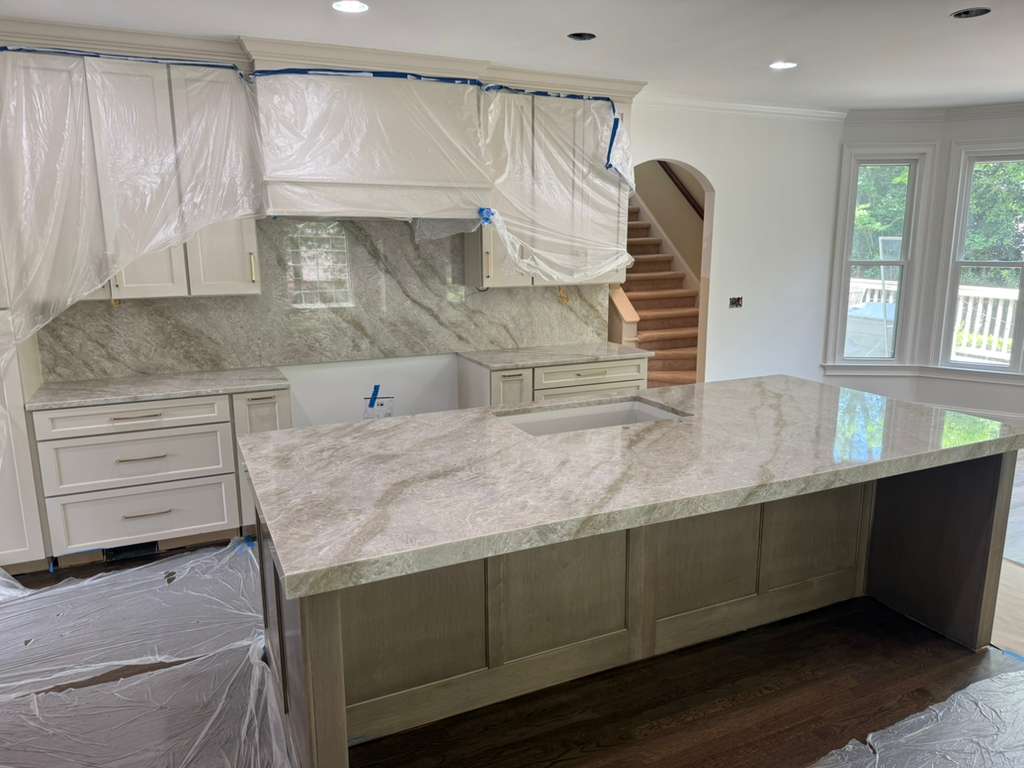
There is a moment in almost every kitchen remodel where the conversation stalls at the slab yard. The homeowner has narrowed it down to two candidates. One is a clean, dependable surface that costs what was budgeted. The other is something unusual, with veining that catches light differently and a price tag that climbs with every square foot. The question hanging over the room is the same one we hear in our Atlanta showroom several times a week: Will the second choice actually pay me back when I sell?
The honest answer is sometimes yes, sometimes no, and the variables that decide which way it lands are rarely about the stone itself. They are about the neighborhood, the buyer pool, the rest of the kitchen, and how long the seller plans to stay. After more than two decades of fabricating and installing surfaces across Metro Atlanta, our team has seen the math swing both ways. Let us walk through what makes a real impact.
What “Luxury” and “Mid-Range” Actually Mean on a Countertop
The terms get thrown around loosely. To a tract-home builder, anything beyond a basic prefab slab feels upmarket. To a custom builder in Buckhead, the floor of “acceptable” might already sit where most homeowners assume the ceiling is. So before we talk about what pays off, we should agree on what we are comparing.
In practical fabricator terms, the tiers usually break down like this:
- Builder-grade or entry options, including basic laminate, prefab edge-bullnose slabs, and the most common, lower-priced engineered surfaces. These show up in starter homes and rental properties.
- Mid-tier choices, which cover the everyday workhorses: standard granite color groups, mainstream quartz patterns, and entry-level quartzite. These materials read as “real stone done well” without dipping into rare territory.
- High-end selections, where the conversation shifts to bookmatched slabs, exotic quartzites with unusual movement, premium Cambria designs, large-format porcelain, and rare marble varieties. Edge profiles get more involved, seams get more carefully planned, and the slabs themselves are often hand-picked.
Where you sit on that spectrum matters less than where your house sits. A premium slab in a townhome surrounded by laminate kitchens is overshooting. A safe mid-tier choice in a million-dollar listing is undershooting. Match the surface to the market, not to the magazine spread you bookmarked.
Why the Tier Question Gets Tricky in Metro Atlanta
Atlanta is unusually segmented in its buyer expectations. A renovated bungalow in Grant Park draws a very different buyer than a new-build in Alpharetta or an estate home on the Chattahoochee. We see the same square footage of countertop pull wildly different returns depending on zip code and price band. That is the part competitor articles tend to skip. They write as if the country is one homogenous market. It is not, and Atlanta in particular rewards owners who pay attention to comps.
What the Data Actually Says About Kitchen ROI
Before guessing at returns, it helps to look at the most cited industry benchmark: the annual Cost vs. Value Report from Zonda and Remodeling Magazine. The 2025 edition is clear on a few points worth understanding before you commit to a tier.
A minor kitchen remodel, which the report defines as keeping the existing cabinet boxes, refreshing fronts and hardware, swapping in new surfaces, and updating fixtures and flooring, remains the single interior project to break 100% ROI nationally. By contrast, a major upscale kitchen overhaul typically recoups roughly half of its cost. The pattern repeats year after year.
What this tells us about countertop choice specifically is straightforward. The surface itself is one of the highest-impact line items inside a smart minor remodel. But once a kitchen project crosses into upscale territory with luxury finishes throughout, the return percentage falls, even when individual materials are genuinely beautiful. The math is not punishing the slab; it is punishing the total spend relative to the neighborhood ceiling.
The 15% Rule of Thumb
A common piece of guidance among real estate professionals: total kitchen spend should hover near 15% of the home’s value. Push past that, and you are buying for yourself, not for resale. Push well under, and you may underinvest in the room buyers care most about. Countertops typically account for 10 to 15% of a full kitchen budget, sometimes more for stone-heavy designs.
When Splurging Genuinely Pays Off
There are real scenarios where reaching for a higher tier earns its keep. We have seen them play out enough times to feel comfortable making the call.
The home is already in a premium tier of its neighborhood. Buyers shopping that bracket expect upgraded finishes throughout. A mid-tier slab will read as a value-engineered shortcut and can actually cost you in negotiations. Premium materials here just meet expectations.
The kitchen is the visual centerpiece of the floor plan. Open-concept layouts mean the surfaces are visible from the living area and the entry, and sometimes from the dining room. When the slab is on display from every angle, investing in something with presence yields a higher payoff than tucking the same slab into a closed-off galley.
You plan to stay five-plus years. Longer ownership shifts the calculation. You get years of personal enjoyment from the upgrade, and the surface still looks current when you list. Pure resale math weakens; total value of ownership strengthens.
The buyer profile in that area skews toward design-aware shoppers. Intown Atlanta neighborhoods with strong design culture (think parts of Inman Park, Virginia-Highland, Morningside) reward distinctive selections in ways that suburban subdivision buyers usually do not.
You are correcting an obvious downgrade. If everything else in the kitchen is upscale and the surfaces are the laggards, upgrading them rebalances the room. The before-and-after delta is where the value lives.
When the Splurge Quietly Backfires
The reverse list matters just as much. Here is where we have watched the extra spend disappear at closing:
- Exotic patterns so distinctive they polarize buyers. Loud movement that one person calls art and another calls busy.
- Premium surfaces in a kitchen with dated cabinets, old appliances, or original flooring. The slab becomes a lonely upgrade.
- Top-tier installation in a price band where buyers are not searching for finishes at all; they are searching for square footage and school zones.
- Custom shapes or edge profiles that future buyers will need to rework if anything ever cracks or chips.
The Mid-Range Sweet Spot
For a meaningful share of Atlanta homes, mid-range surfaces are the right answer. Not because they are a compromise, but because they hit a return profile that hard-to-beat upgrades cannot match. Cabinet refacing combined with new mid-tier countertops, a fresh sink, and updated hardware is essentially the Cost vs. Value Report’s recommended formula, and it is recommended for a reason.
A well-chosen mid-range granite or a mainstream quartz pattern delivers most of what buyers consciously evaluate: a real-stone aesthetic, low daily maintenance, durability that survives showings, and a finish that photographs well in listings. Some buyers can identify a luxury slab at a glance. Most cannot. They feel “this kitchen looks updated” and move on to the next room.
Where Mid-Range Holds Its Own Visually
Quartz, in particular, has narrowed the gap. Modern engineered surfaces can convincingly mimic the veining of marble or the textures of concrete while avoiding the maintenance penalty. For a buyer touring a home, a mid-range quartz with subtle Calacatta-style veining often reads identically to far pricier marble. Granite has its own sweet spot in solid-color groups and mainstream movement patterns, which photograph beautifully without commanding the premium that exotic slabs do.
Material-by-Material Snapshot
Here is how the common surfaces compare from a resale and value-positioning standpoint. This is the kind of summary chart we wish more clients saw before they walked into a slab yard.
Material | Typical Tier | Strengths for Resale | Buyer Considerations | Care Profile |
Granite (mainstream colors) | Mid | Broad appeal, “real stone” perception | May need periodic sealing depending on the slab | Periodic sealing varies by stone |
Granite (exotic slabs) | High | Visual drama, statement piece | Polarizing patterns can narrow the buyer pool | Same general care as standard granite |
Quartz (mid-tier engineered) | Mid | Consistent look, no sealing, photographs well | Engineered, not natural stone | Daily wipe-down, mild soap |
Quartz (designer collections like Cambria) | High | Premium patterns, lifetime warranty support | Higher upfront, similar care to mid-tier | Same routine as any quartz |
Quartzite | Mid to High | Natural stone with a strong durability profile | Often confused with quartz; clarify with buyers | Sealing recommended; varies by slab |
Marble | High | Timeless luxury cue, white tones | Etches from acids; not ideal for heavy-use kitchens | More attentive care; sealing required |
Porcelain (sintered surfaces) | High | Heat and UV resistance, large formats | Newer category; buyer familiarity is still growing | Low maintenance, no sealing |
Soapstone | Mid to High | Distinctive matte aesthetic | Niche look; not for every buyer | Naturally non-porous, mineral oil for appearance |
Laminate | Entry | Budget-friendly, easy to replace | Reads as dated in mid-tier and above markets | Wipe-clean, but vulnerable to heat |
Worth noting on terminology: quartz and quartzite are commonly confused, even by listing agents. Quartz is engineered, roughly 90 to 95% ground natural quartz bound with polymer resins. Quartzite is a natural metamorphic rock cut from quarried slabs. Buyers who know the difference will check listing language, so accuracy in marketing materials matters.
Resale Strategy by Timeline
How long until you sell shapes the right answer more than any other single factor. We use a simple framework with clients:
- Selling within twelve months: stay mid-range, lean neutral, prioritize “move-in ready” perception over distinctiveness.
- Selling in two to four years: mid-range to upper-mid is the safer zone. You get a few years of enjoyment, and the surface still feels current at the time of listing.
- Selling in five-plus years, or no firm timeline: the splurge becomes more defensible. Personal enjoyment compounds. Just keep edge profiles and color palettes broadly appealing.
Working With Cabinets, Not Against Them
One of the most common mistakes we see is treating the surface decision in isolation. The cabinets dictate so much of what a slab will look like in context. A premium slab over tired cabinets looks like what it is: a single upgrade in a half-finished kitchen. Conversely, mid-range countertops over freshly refaced cabinets can read as a complete, considered remodel.
If you are weighing whether to splurge on the slab or rework the cabinets, the cabinet decision usually wins. Custom cabinetry occupies more visual real estate, and refaced cabinets paired with a smart mid-tier surface beat untouched cabinets paired with a luxury slab almost every time. It is one of the few renovation truths that holds across price bands.
How Atlanta-Specific Factors Affect the Math
A few realities shape this market specifically. Atlanta’s climate puts less stress on indoor surfaces than coastal humidity does, so durability concerns lean more toward daily use than environmental wear. Open-concept layouts dominate new and renovated homes, raising the visibility (and importance) of the kitchen surface. Buyers shopping in town neighborhoods often place more weight on design originality than suburban shoppers, who tend to place more weight on perceived maintainability.
There is also the matter of school-district homes and how quickly they turn. In high-demand zones, even a competent mid-range remodel will draw multiple offers. In those cases, splurging on premium materials rarely adds proportional value, because the home was going to sell strongly regardless.
Frequently Asked Questions
-
What is the best countertop for resale value?
For broad market appeal, mid-tier quartz in neutral tones tends to deliver the most reliable resale support across price bands. It photographs well, requires no sealing, and reads as "updated" to almost every buyer demographic. Granite remains a strong second, especially in solid-color groups. The truly best choice depends on your home's price tier and neighborhood comps, so a surface that wins in one zip code might disappoint in another only a few miles away.
-
What is the ROI on kitchen countertops?
Industry data from the 2025 Cost vs. Value Report shows minor kitchen remodels, which include new surfaces, can return at or above 100% of project cost nationally. Countertop-only updates within a minor refresh tend to track similarly. Major upscale kitchen overhauls typically recoup closer to 50%, partly because luxury finishes throughout exceed what buyers are willing to pay back. Returns also vary by region, so that Atlanta numbers may run slightly above or below national averages, depending on the year and neighborhood specifics.
-
What kitchen upgrades decrease home resale value?
Highly personalized choices tend to hurt rather than help. Bold, unusual colors on cabinetry or fixtures, layouts that remove storage, ultra-niche appliances that average buyers find intimidating, and exotic surfaces with polarizing patterns are common culprits. Overinvesting beyond neighborhood ceilings also backfires; a million-dollar kitchen in a half-million-dollar home rarely recovers the spread. Removing functional features (like a pantry or breakfast nook) to chase a design trend is another reliable way to narrow your buyer pool.
-
Can you negotiate countertop prices?
There is some flexibility, particularly around slab selection, edge profiles, and timing. Choosing from a fabricator's available inventory rather than ordering a specialty slab usually yields better value. Standard edge profiles, like eased or quarter-round, cost less than ogee or waterfall edges. Off-peak scheduling can sometimes help. We would caution against pushing too hard on installation labor, since shortcuts there show up later as failed seams, uneven overhangs, or poorly supported overhangs that crack under stress.
Ready to Choose a Surface That Earns Its Spot?
Every kitchen has the right answer, but it rarely comes out of an online calculator. The combination of your neighborhood, your home’s price band, your timeline, and the rest of the room all factor into whether the splurge will reward you or stall on you. Our team at Atlanta Stone Creations walks clients through this conversation every week, often before a single slab is selected.
If you are planning a remodel and want a candid, no-pressure read on where your budget will work hardest, explore our gallery of completed projects or reach out for a personalized consultation. We will tell you when the upgrade makes sense, and just as importantly, when it does not.

Val Carvalho is a manager at Atlanta Stone Creations, with nearly two decades of experience in the stone and design industry. In addition to her leadership role, Val plays a key part in sales and design, bringing creativity, precision, and a strong sense of style to every project. Known for her warm and collaborative approach, she builds strong relationships with both her team and her clients. Val is passionate about delivering beautiful, high-quality results and creating an exceptional experience from start to finish.