
How Much Value Do Granite Countertops Add to a Home? A Data-Backed Answer
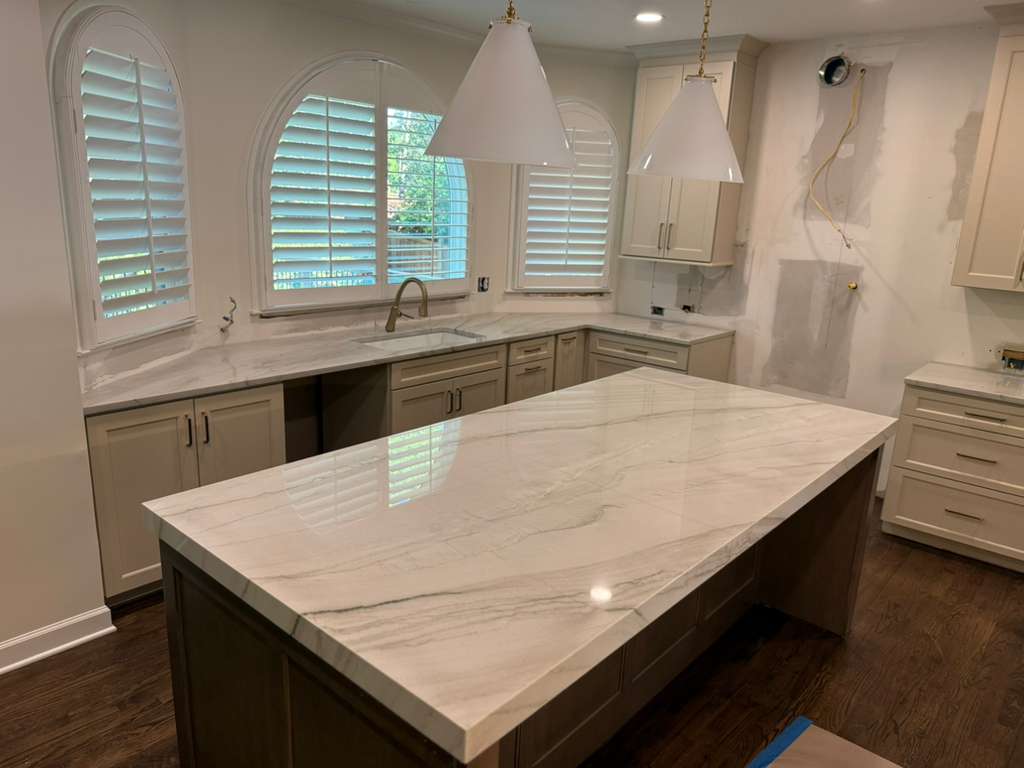
Ask 10 Realtors, and you’ll get 10 slightly different replies, but the data clusters into a fairly narrow band. Most industry sources estimate the recovery rate for stone countertop upgrades at 60% to 80% of the project cost when sold as a standalone improvement. When the same surface is folded into a thoughtful minor kitchen refresh, the picture shifts. A minor kitchen remodel returned 113% nationally, per the 2025 Cost vs. Value Report, with countertops among the highest-leverage components within that scope.
So yes, granite earns its keep on resale, but rarely in isolation. It works hardest when it sits next to fresh cabinet fronts, a tidy backsplash, and modern hardware.
Why a Range Instead of One Number?
Because no two houses, no two neighborhoods, and no two buyers behave the same way. A premium slab in a $1.4M Buckhead listing reads as expected baseline. Appraisers might flag the same slab in a $280K starter in Stone Mountain as an over-improvement. The recovery rate depends heavily on where the home sits in its local price tier.
What Buyers in Today’s Market Actually Care About
In our experience working with Metro Atlanta sellers, buyers are quicker now than they were a decade ago to inspect what lies beneath the surface. They open cabinets. They run a hand along the seam. They ask about backing material and edge profiles. The visual still matters, of course, but functional confidence has crept up the priority list.
Buyer priorities we hear most often during walkthroughs:
- Does the surface look move-in ready, or will I have to redo it?
- Is the stone sealed properly and free of obvious wear?
- Does the color suit a wide range of cabinet finishes?
- Will this hold up to a busy family without constant fuss?
That last point matters more than any trend forecast. Buyers walking through Roswell ranch homes or Decatur bungalows often weigh perceived upkeep against the asking price. A surface that looks great but feels high-maintenance can quietly drag negotiations.
The Real Numbers Behind Countertop ROI
Here’s where things get interesting. According to the Journal of Light Construction’s 2025 Cost vs. Value Report, a minor kitchen remodel offers an ROI of 113%, while a midrange remodel offers an ROI of 51%. The takeaway? Restraint pays. Pouring tens of thousands into a full gut renovation rarely recovers its full cost; refreshing strategically does.
The U.S. countertops market is projected to reach $35.57 billion in 2026, driven by homeowners who desire high-value renovations over relocating. Translation: more sellers are upgrading surfaces before listing rather than discounting during negotiations.
Where Granite Sits on the Spectrum
Granite countertops contribute solidly to that 113% minor-remodel figure when chosen well. The catch: buyers in 2026 are far more design-literate than they were in 2008. Heavy speckled brown slabs, the kind that defined the late-2000s boom, can read as dated. Lighter, more linear granites with subtle movement perform better in today’s listings.
Material | Buyer Appeal (2026) | Maintenance Reality | Best Fit |
Granite | Strong in mid-to-high tier homes; depends on color | Periodic sealing depending on slab porosity | Traditional, transitional kitchens |
Quartz | High; favored by younger buyers | Non-porous, no sealing needed | Modern, minimalist designs |
Quartzite | Growing fast; perceived as premium | Periodic sealing; harder than granite | Statement islands, luxury baths |
Marble | Polarizing; loved or feared | Higher upkeep; etches easily | Baking stations, pastry kitchens |
Soapstone | Niche but loyal | Naturally non-porous; mineral oil applied for a look | Farmhouse, character homes |
Porcelain | Emerging | Very low; sintered surface | Modern, indoor/outdoor spaces |
Why Some People Say Granite Is “Out”
You may have seen the headlines. Is granite dead? The honest answer, from someone who fabricates it weekly: not really, but the conversation has changed.
Quartz has taken meaningful market share, especially in newer construction and higher-end remodels. The NKBA 2026 trends report indicated that quartz countertops were favored by 78% of survey respondents for their natural-stone appearance and low maintenance. That’s a striking figure. But it doesn’t mean granite has disappeared from buyer wishlists; it means buyers now have more credible alternatives.
What’s actually fading is a specific granite style, not the material itself. Busy, golden-brown slabs with heavy speckling read as 2005. Cleaner, quieter granites with linear veining or soft neutral fields are still finding eager buyers, particularly in homes where natural stone fits the architectural character.
The Case Granite Still Makes
Granite outperforms quartz in heat resistance, which matters to serious home cooks. It carries the cachet of being genuinely natural rather than manufactured. Each slab is one-of-a-kind. And in certain markets, especially traditional or rustic homes around Marietta or Alpharetta, a well-chosen granite top reads as authentic in a way engineered surfaces sometimes don’t.
Does Granite Still Add Resale Value? Yes, With Conditions
Granite countertops can add real, measurable value when three conditions line up:
- The slab choice matches the home’s price tier and design language.
- Installation is clean, with tight seams and proper undermount sink integration.
- The surrounding kitchen elements (cabinets, backsplash, lighting) feel current.
Skip any of those, and the value contribution shrinks. We’ve walked into Atlanta homes where builder-grade cabinets and a chipped tile backsplash undermined a beautiful granite countertop. Buyers see the whole picture, not isolated upgrades.
A Word on Over-Improvement
There’s a temptation to buy the most expensive exotic slab available, believing it’ll wow appraisers. It rarely works that way. Appraisers and buyers compare your home to nearby comparables. If neighborhood norms cap at mid-grade granite, an exotic blue Bahia slab won’t add much beyond the price-tier ceiling. Match the surface to the context.
What About Color? The 2026 Conversation
Buyers gravitate toward neutral, light-leaning surfaces right now. After years of all-white kitchens dominating the market, 2026 marks a definitive swing toward warmth, with homeowners craving spaces that feel cozy and inviting, translating to countertops with warm undertones, brown veining, and cream bases.
For granite specifically, the sweet spot in 2026 sits with:
- Soft white-and-gray granites with linear, marble-like veining
- Warm cream or beige fields with subtle mineral activity
- Greige tones that bridge gray and warm neutrals
- Quieter blacks (for islands or contrast applications) without heavy fleck
What’s losing favor? Heavily speckled gold-brown granites and ultra-busy multicolor slabs that fight with cabinetry.
Does That Mean Bold Colors Are Off the Table?
Not entirely. A statement island in a dramatic blue or green granite can still wow, but it works best when the perimeter surfaces stay calm. Think of it like a great piece of art on a quiet wall.
Granite Versus Quartz: Which Helps Resale More?
Honest take? It depends on the home’s price tier and the buyer pool.
In starter and mid-tier listings, granite still resonates. It’s familiar, it photographs well, and most buyers recognize it as an upgrade over laminate or tile. In luxury listings priced above $750K in Atlanta, quartz often edges ahead because the design-forward buyer pool reads it as more current.
But here’s a nuance worth raising: quartz can’t take direct heat the way granite can. Quartz countertops offer extreme durability and heat resistance, while granite surfaces can crack and weaken over time due to temperature changes. Some industry voices reverse that comparison; in our shop’s experience, granite handles a hot pan better, while quartz handles spilled wine better. Both are true, depending on which failure mode worries you most.
Frequently Asked Questions
-
How much will granite countertops increase home value?
Granite typically returns 60% to 80% of installation costs as a standalone project, with stronger recovery when included in a minor kitchen refresh. Countertop replacement as a standalone project returns roughly 60 to 80 cents on the dollar. The actual figure depends heavily on local comparables, slab quality, and the extent to which the upgrade integrates with surrounding kitchen elements. Sellers in higher-priced Atlanta neighborhoods often see a stronger appraisal lift than those in lower-priced tiers, where the upgrade may exceed what comparable listings carry.
-
Why don't people use granite anymore?
People still install granite extensively; the perception has shifted because quartz has gained ground in newer construction and high-end remodels. The dated reputation often refers specifically to heavy speckled brown granites from the early-2000s housing boom, not the material as a whole. Cleaner, lighter granites with subtle movement continue to perform well with buyers. Some markets and architectural styles still favor natural stone over engineered alternatives, particularly for traditional kitchens or homes with character-driven design.
-
What is the best countertop to increase home value?
There isn't a single universal winner; it depends on the home's price tier and the buyer pool. Quartz tends to perform best in modern, design-forward listings, while granite holds strong in traditional or mid-tier markets in Metro Atlanta. Quartzite is rising in popularity among luxury homeowners. The smarter question is which material aligns with your neighborhood's comparables. Over-improving rarely pays back; matching the surface to the home's context produces the most reliable resale lift on average.
-
What color countertops are in for 2026?
Warm neutrals lead 2026 buyer preferences, particularly soft whites with honey or amber veining, creamy backgrounds with subtle movement, and greige tones that bridge gray and warmer palettes. Heavy multicolor surfaces and starkly dark blacks are losing some traction in mainstream listings, though they can still work as statement islands. The broader shift moves away from cold all-white kitchens toward inviting, biophilic palettes. Choosing timeless veining over trend-chasing patterns tends to age better through resale cycles.
Ready to Talk Through Your Options?
Choosing a surface that lifts your home’s value is part data, part design instinct, and part knowing your local market. If you’re weighing options for a remodel or prepping a home for sale around Metro Atlanta, we’d be glad to walk you through what’s working in your neighborhood right now. Browse our project photos in the gallery for ideas, or reach out to schedule a consultation to talk through slab choices, edge profiles, and what your buyer pool is likely to respond to.

Val Carvalho is a manager at Atlanta Stone Creations, with nearly two decades of experience in the stone and design industry. In addition to her leadership role, Val plays a key part in sales and design, bringing creativity, precision, and a strong sense of style to every project. Known for her warm and collaborative approach, she builds strong relationships with both her team and her clients. Val is passionate about delivering beautiful, high-quality results and creating an exceptional experience from start to finish.