
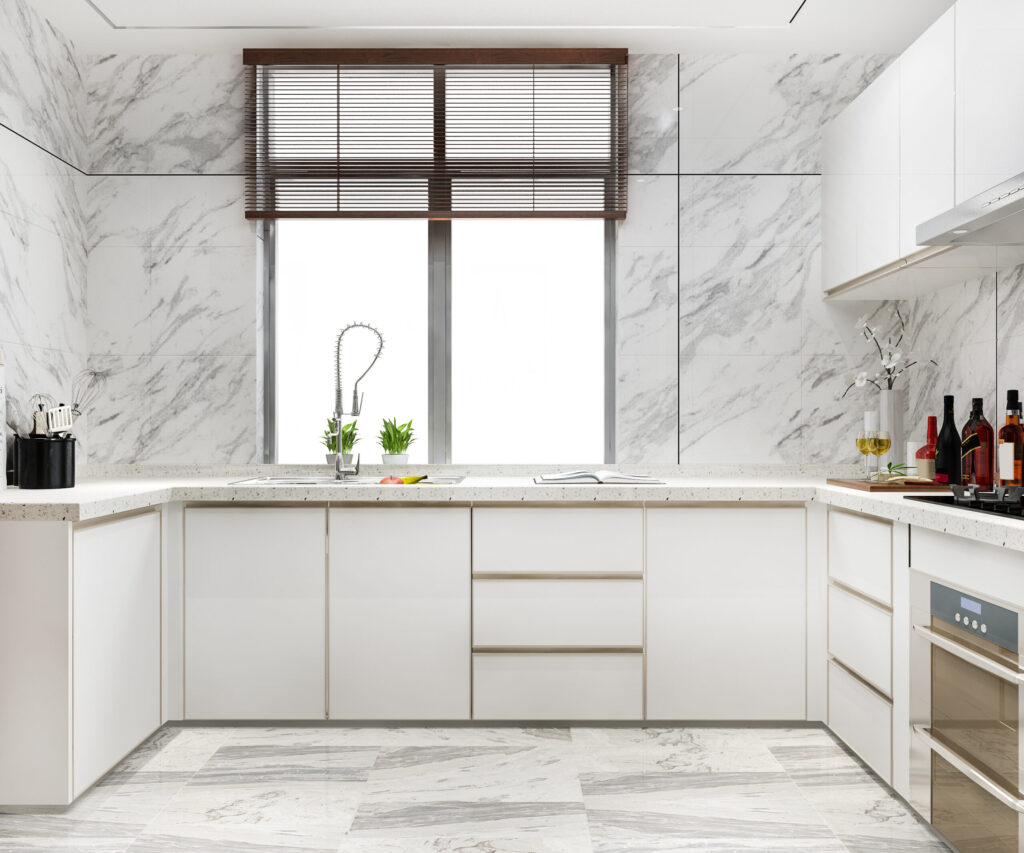
A kitchen counter takes more punishment than almost any surface in your home. Hot pans, dropped cans, spilled wine, knife slips, and daily scrubbing all land here, day after day, year after year. So when people ask which countertop truly lasts, they are really posing a bigger question: which one shrugs off hard use without looking tired a decade later? This guide walks through the toughest options on the market, what each does well, where each falls short, and how to match one to the way you actually cook and live. There is no single champion here, only the right fit for a given home, and the differences between these surfaces are bigger than most showrooms let on.
Quick answer: for most homeowners, quartz offers the easiest upkeep, while porcelain offers the greatest toughness, making those two the safest all-around picks. Granite is the standout for serious cooks who value heat resistance; porcelain also shines where a top must handle sun and rain, not only indoor duty; soapstone suits relaxed, rustic homes; and laminate stretches the tightest budget the furthest.
What Separates a Durable Countertop From the Rest
Toughness is not a single quality. A slab that laughs off a hot skillet might still scratch under a careless knife, and one that never stains might chip along a thin edge. Real longevity comes from how a material balances several competing stresses at once, so the honest answer to “what is best” always begins with how your kitchen is actually used. A quiet couple who eat out often will wear a coat very differently than a family of five who bakes every weekend. Thinking through your own routine first saves both money and regret, since the priciest slab is not automatically the smartest one for your table.
The Traits That Matter Most
When we judge how well a surface holds up over the long run, a handful of factors carry the most weight:
- Resistance to scratches, chipping, and dents from daily wear
- How it copes with heat from pots, pans, and small appliances
- Whether liquids sink in and leave lasting stains
- How much upkeep, sealing, or careful handling idoes does it require
Weigh those four honestly against your habits, and the field narrows fast. A cook who sears on cast iron cares most about thermal tolerance, while a busy parent may rank wipe-clean convenience above everything else.
How We Ranked These Surfaces
The options below run roughly from most resilient to most demanding, judged on real-world wear rather than looks or fashion. Where a surface needs babying to earn its keep, we say so plainly. No single choice suits every home, so treat this as a shortlist to weigh against your budget, your design taste, and your patience for maintenance. Prices are left out on purpose; the smartest way to compare cost is a quote built around your actual layout. Here is how the field stacks up overall, from the hardest-wearing to the most demanding:
- Porcelain, nearly impervious to scratches and hot pans, with no sealing at all
- Quartzite, the toughest natural stone, is rated harder than granite
- Granite, dense and thermally tough, forgiving of a genuinely busy household
- Quartz, carefree and practically stain-proof, though wary of high temperatures
- Stainless steel, commercial-grade and endlessly cleanable, if quick to show scratches
- Soapstone, warm underhand and pan-safe, softer yet aging into a handsome patina
- Concrete is sturdy and long-lived once sealed, though it can hairline-crack with age
- Corian-style acrylic, smooth and fully repairable, yet quick to scorch beneath hot cookware
- Laminate is affordable and fuss-free, but it is the first to chip and wear
- Marble, breathtaking yet soft, is the fussiest of all to keep pristine
Quartz: The Low-Maintenance Workhorse
For sheer ease of living, quartz is hard to top, and it has become the default in remodels for good reason. It is an engineered product, roughly 90 to 95 percent ground natural quartz blended with resins and pigments, which leaves it non-porous straight from the factory. That one trait quietly erases a long list of headaches, from annual sealing to worrying about a splash of red wine at dinner.
Where Quartz Earns Its Reputation
Homeowners keep circling back to this engineered surface for a few practical reasons:
- No sealing, ever, so routine upkeep stays truly minimal
- Naturally resists stains from wine, coffee, citrus, and oil
- Scratch-resistant enough to survive everyday knife slips
Because it is manufactured, color and pattern remain consistent from one slab to the next, making bookmatched islands and long runs look flawless. The palette now includes remarkably convincing natural stone imitations, with veining and all. You can explore engineered quartz surfaces in nearly any tone, and as a Cambria dealer, we lean on the Cambria collection when clients want depth and consistency in one package.
The Trade-offs to Know
The catch is temperature. The resin binder that makes this material so easy to live with is not truly heat-proof, so a screaming-hot pan set directly on the slab can scorch or dull the polished finish. Keep a trivet within reach, and the problem never arises. Long hours of direct sun may also lighten some paler tones across many years, so this manufactured top belongs indoors rather than on a sunny patio. Neither quirk is a dealbreaker, but both deserve a mention before you sign off. When treated with basic indoor care, this engineered top will look showroom-fresh for decades with next to no effort.
Granite: The Natural Heavyweight
If you want genuine stone with real backbone, granite still sets the standard, a status it has held for generations. Quarried in staggering variety across the globe, no two slabs are alike, and its dense crystalline structure was built by geology to endure. Few surfaces carry a busy household as gracefully.
Strengths That Keep It Popular
Here is why this quarried stone has stayed a kitchen mainstay:
- Genuinely heat-resistant, taking hot cookware straight off the burner
- Hard and dense, so it fends off scratches, chips, and knocks
- Utterly unique slab to slab, adding character no factory can copy
The single caveat is porosity, which varies from stone to stone. Most granite varieties require periodic sealing to prevent spills from soaking in, though very dense, dark varieties may need it only rarely. A quick water-drop test tells you when the moment has come. If a one-of-a-kind look draws you in, browse our natural granite slabs to see just how wide the range of colors and movement runs. Once sealed, the stone also fights bacteria well, a quiet bonus for anyone who preps raw meat directly on a work zone.
Quartzite: Harder Than It Looks
Constantly confused with the engineered lookalike, this natural stone is a wholly different beast: a metamorphic rock born when sandstone is fused deep underground by heat and pressure. On the Mohs hardness scale, it rates above granite, and that grit shows in daily use. It shrugs off scratches beautifully and takes a hot pan in stride, and, stain-free like most quarried stone, it appreciates an occasional reseal to stay stain-free. The appeal is aesthetic as much as it is practical: many slabs mimic the soft, flowing veins of high-end stone while offering greater resilience. For anyone torn between beauty and brawn, these hard, natural slabs genuinely split the difference and suit hardworking islands especially well.
Marble: Stunning but High-Maintenance
No surface whispers luxury quite like marble, and none stirs more debate among fabricators. It is undeniably breathtaking, prized for centuries in the grandest homes, yet it remains a soft, porous stone that asks for real commitment once it lands in a working kitchen.
Living With Marble Day to Day
Before you fall for that veil, walk in with clear eyes about the realities:
- Acidic spills like lemon, tomato, or wine can etch the polish
- The stone scratches more readily than granite or its harder cousins
- Regular sealing is needed to hold staining at bay
None of that rules it out; it simply makes the stone a considered pick. Plenty of serious cooks happily embrace the soft patina that develops with age, treating the marks as character rather than damage. If you love the look and accept the upkeep, our marble surfaces reward the commitment, particularly on a baking station or a lightly used island where the beauty shines without constant abuse. Pastry makers in particular prize its naturally cool touch, which keeps dough from sticking through a long rolling session.
Soapstone: Soft Feel, Tough Character
Here is a quiet overachiever that rarely gets its due. Soapstone feels warm and almost silky to the touch, yet it performs far better than that gentle touch suggests. Since it is naturally non-porous, the stone never asks for sealing and simply ignores the acids and spills that would scar softer stone. It is heat-resistant enough that you can set a hot pot directly on it without a second thought, a rare and welcome quality. The one honest limitation is that its softness makes it prone to scratching or denting, though most owners come to love how those marks melt into a deepening, living patina. An occasional rub of mineral oil enriches the color and evens the tone, a five-minute ritual rather than a chore. Take a look at our soapstone options if a matte, understated character speaks to you.
Porcelain: The Sintered Newcomer
One of the toughest surfaces money can buy is also among the newest to reach residential kitchens. Porcelain is a sintered material, formed by firing natural clays and minerals at a ferocious temperature until they fuse into an ultra-dense panel. That manufacturing process, not quarrying, is the source of its remarkable grit.
Why Porcelain Handles Abuse So Well
The performance reads like a wish list. Being non-porous, it skips sealing altogether and repels stains with almost no effort. It tolerates high temperatures, taking hot pans without a mark, and its face is so hard that scratches and even ultraviolet fading struggle to touch it. That all-weather resilience is why identical slabs perform indoors and out. Fabrication does demand a skilled hand, since thin panels can chip along an unsupported edge if mishandled, but installed properly, porcelain slabs rank among the most rugged choices you can install. Its ultra-thin profile opens design doors too, from waterfall islands to full wall cladding, that heavier stone cannot always manage.
Concrete: Custom and Industrial
For a bold, made-to-order look, cast tops have earned a devoted following. They can be poured into any footprint, tinted to nearly any shade, and finished glassy or raw, which suits modern, industrial-leaning spaces. No two counters come out identical, and that handmade quality is much of the appeal.
Care and Longevity
The trade-off is attention. This material is porous, so it relies on sealing to resist stains, and it can develop fine hairline cracks as it cures and settles over the years. Those cracks are usually cosmetic rather than structural, and many owners fold them into the character. Handled by a skilled fabricator and resealed on schedule, a cast top holds up for decades and takes high temperatures in stride. It is worth hiring someone experienced, since a poured surface is only as good as the person who mixes, pours, and finishes it.
- Reseal periodically so liquids cannot soak in and darken the finish
- Wipe acidic spills quickly, since the surface reacts to them
Stainless Steel: The Commercial Standard
There is a reason professional kitchens run on commercial-grade steel. It is non-porous, deeply hygienic, and utterly indifferent to temperatures that would ruin nearly anything else, which is precisely why restaurant crews trust it through relentless daily service. In a home, it lends a crisp, industrial edge that pairs beautifully with matte cabinets and warm wood.
Where Steel Makes Sense
The metal is not flawless in a domestic setting, and a couple of quirks give some buyers pause:
- It scratches and dents, though many read that wear as a lived-in patina
- It shows fingerprints readily and can clatter under heavy cookware
Put it where function leads, such as a dedicated prep zone, a bar back, or a serious cook’s main run, and it proves nearly indestructible while staying effortless to disinfect. Pairing a steel work surface with a warmer stone elsewhere in the room is a popular way to get the best of both.
Laminate: Budget-Friendly and Better Than Ever
Long written off as cheap, laminate has quietly grown up. Modern printing wraps it in convincing stone-and-timber looks, and it remains the most budget-friendly route by a wide margin, which keeps it firmly in the conversation for smart remodels.
Its strengths and its limits are easy to lay out side by side:
- Light, affordable, and offered in a nearly endless run of patterns
- Simple to wipe clean and free of any sealing requirement
- Prone to scorching, deep scratches, and edge peeling over time
It will never outlast stone, and moisture can eventually creep into a seam, but for a rental unit, a laundry room, or a tight-budget refresh, it delivers honest value. Just keep hot pans on a trivet, and it will serve you well for years. For a first kitchen or a property you plan to sell soon, that combination of low cost and quick installation is genuinely hard to argue with. Newer textured finishes even echo the feel of stone rather than just the look, closing a good deal of the gap that once earned it a poor name.
Solid Surface: Smooth and Repairable
Acrylic-based solid surfacing, best known under the Corian name, occupies a genuinely useful middle ground. It joins with nearly invisible seams, integrates a sink into a single continuous piece, and remains non-porous throughout. Its signature strength is renewal: because the color runs through the whole slab, light scratches and shallow burns can be sanded away, and the finish can be repaired to like-new. The flip side is temperature: these acrylic tops are not heat-tolerant, and a hot saucepan can mar or warp them. They also mark more easily than stone. For a smooth, uniform look that forgives the odd mishap, though, this remains a sensible, low-drama pick. Families with young children often appreciate that a scuffed corner can simply be buffed back rather than replaced.
Durability Compared Side by Side
Sometimes it helps to see the whole field at a glance. The chart below summarizes how the leading options behave under everyday kitchen stress. However, results always vary with the specific slab, the finish, and how hard a household uses a surface.
|
Material |
Scratch Resistance |
Heat Tolerance |
Sealing |
Overall Upkeep |
|
Quartz |
High |
Fair |
None |
Very low |
|
Granite |
High |
Excellent |
Periodic |
Low |
|
Quartzite |
Very high |
Excellent |
Periodic |
Low |
|
Marble |
Low |
Very good |
Frequent |
High |
|
Soapstone |
Fair |
Excellent |
None |
Low |
|
Porcelain |
Very high |
Excellent |
None |
Very low |
|
Concrete |
Fair |
Very good |
Periodic |
Moderate |
|
Stainless steel |
Fair |
Excellent |
None |
Low |
|
Laminate |
Low |
Poor |
None |
Low |
|
Solid surface |
Fair |
Poor |
None |
Low |
Frequently Asked Questions
Which countertop materials do kitchen designers recommend avoiding?
Many designers steer clients away from tile, since grout lines stain, trap grime, and crack, and away from standard laminate in high-end kitchens because it scorches and its edges peel with age. Soft stones like limestone and marble, for heavy daily use, warrant caution, as both etch and scratch with ease. Cultured marble and plastic-based composites can warp or burn under a scorching pan. None are automatically wrong, but each carries upkeep or longevity trade-offs that reward a little homework before you spend real money.
Which material is best for a kitchen countertop?
No single material is a universal winner, because the right pick hinges on how you cook and clean. For low-fuss, strong all-around performance, porcelain and quartz lead the field. Cooks who set hot pans down constantly gravitate toward granite, soapstone, or another hard stone for thermal toughness. When budget rules the decision, laminate stretches furthest. Marble rewards those who welcome its patina. Match the surface to your habits, traffic level, and the upkeep you genuinely want, and the best countertop material for your home will reveal itself.
Is granite or quartz tougher?
They win on different fronts, so the real answer depends on the threat. Granite is more heat-tolerant and can withstand a pot fresh from the burner unharmed, and resists scratches very well. The engineered rival is harder to stain and skips sealing entirely, yet its resin can scorch under extreme temperatures. For scratch and impact resistance, the two run close, while granite clearly leads in thermal resistance, and quartz holds the edge in stain resistance. Both comfortably outlast softer materials in a demanding household.
What is the least-maintenance countertop?
Quartz and porcelain top the list for hands-off living. Both are non-porous, so neither needs sealing, and both fend off stains, scratches, and bacteria with nothing fancier than mild soap and water. Porcelain layers offer superior heat tolerance, while the engineered option offers the widest spread of shades and patterns. Steel and soapstone also rank low on effort since they skip sealing completely. If a carefree, durable kitchen is the goal, begin your search with those four, and you will rarely be disappointed.
Choosing the Right Surface for Your Kitchen
The most durable countertop is the one that fits how your household truly lives, not the one topping this season’s trend list. Whether you lean toward carefree quartz, rugged granite, or a statement stone full of character, sound guidance from a fabricator who works with these materials every day makes the decision far easier. Browse finished projects in our countertop gallery for real inspiration, then reach out via our contact page to discuss materials, compare kitchen countertops in person, and schedule a free consultation for your household.
Related Posts
5 Essential Care Tips for Maintaining Stone Countertops
granite, marble, quartz, quartzite
Stone countertops are not just a part of your kitchen or bathroom; they are an investment in your home’s value and beauty. Proper maintenance is key to preserving their elegance
Read More
Pros and Cons of Natural Quartz Countertops
quartz
Quartz countertops are durable and low-maintenance with uniform patterns, but expensive and susceptible to UV discoloration. They offer many color options, but hot items can cause damage. While scratches can
Read More