
Countertop ROI by Material: Which Surface Delivers the Strongest Return?
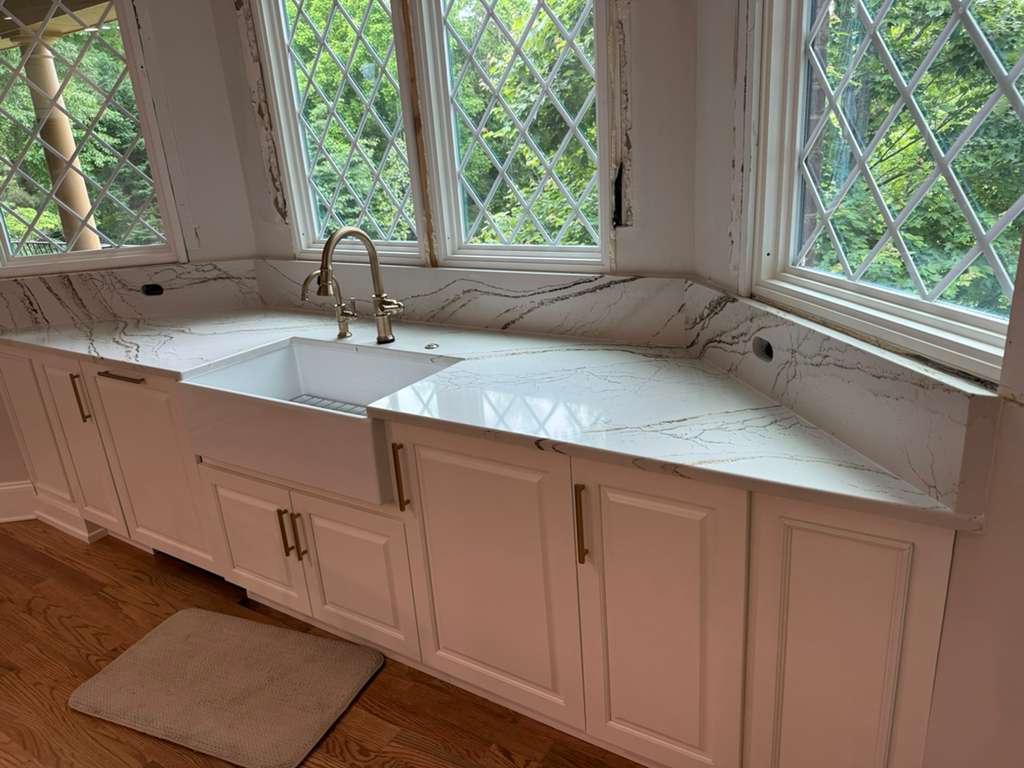
Choosing a kitchen surface for resale is a different exercise from choosing one for daily life. Both matter, of course, but a homeowner planning to sell inside the next five years is essentially asking a question about market psychology: what will the next buyer pay extra for, and what will they shrug at? Around Metro Atlanta, that question lands on our desk almost weekly. Sellers in Buckhead, Marietta, Alpharetta, and the intown neighborhoods all want the same thing: a finish that feels current, holds up to a home inspection, and signals “move-in ready” without overshooting the rest of the home.
The honest answer is that no single surface wins every category. Granite still carries weight in traditional builds. Quartz dominates younger buyer searches. Quartzite has been pulling ahead in higher-end listings. And the actual return on a countertop swap depends less on the slab itself and more on how the kitchen sits in its neighborhood. We’ll walk through the numbers and the nuance below.
Why Countertops Carry So Much Weight at Resale
Walk into any kitchen, and your eye lands on the work surface first. Cabinets matter, sure, but they sit underneath. Counters are eye level. They reflect light, catch fingerprints, and, at a glance, tell a buyer whether the kitchen has been touched in the last decade.
That visual weight has a financial echo. According to a recent National Association of Home Builders survey, roughly 78% of buyers said they preferred stone countertops, whether engineered or natural. That preference shows up in how quickly homes move. Listings with updated stone surfaces tend to attract faster offers, especially in the $400K and up bracket, where buyers expect a certain finish level baked into the asking price.
A few things drive that buyer reaction:
- The kitchen reads as “done” rather than as a future project
- Stone signals durability, which buyers interpret as lower maintenance ahead
- Premium materials photograph well, and listing photos do half the selling
- A fresh surface often hides minor cabinet wear that would otherwise stand out
In our experience working with Atlanta-area realtors, the high-impact upgrades almost always include the counter. Replacing tired laminate or worn tile with a current stone option is often the single biggest visual lift in the entire house.
What the 2025 Cost vs. Value Report Actually Says
Here’s where the resale math gets interesting. The Cost vs. Value Report from Zonda, published annually with Remodeling magazine, gives the cleanest national read on remodel returns. The 2025 edition found that a minor kitchen remodel in the $28,000 to $30,000 range delivered the strongest ROI of any interior home improvement project, with a national ROI of nearly 113%.
That’s a kitchen refresh, not a gut renovation. It involves keeping the existing cabinet boxes, replacing the fronts and hardware, and updating the appliances, counters, sink, and flooring, with no structural changes. Counters are a centerpiece of that scope.
What about high-end, gut-it-all overhauls? The data is less generous. Major remodels in the $82,000 to $164,000 range typically return only 36% to 51% of their cost at resale. The takeaway for sellers is pointed: the surface change carries more weight than the structural one. A targeted upgrade of countertops and a few visible features often beats a sprawling redesign on pure return on investment.
Why such a high spread? A few reasons stand out:
- Buyers pay for what they see, not for the framing inside the walls
- Layout changes get personalized to the seller’s taste and may not match the next owner’s preferences
- A polished refresh signals care without making buyers wonder what got rewired
- Neighborhood ceilings cap what any kitchen can recoup, no matter the spend
Granite’s Place in the Resale Conversation
For roughly two decades, granite has been the default upgrade in mid-range American kitchens. Granite still sells homes, but its position has shifted. In some Atlanta neighborhoods, it now reads as an expected baseline rather than as a premium feature. In others, particularly traditional or historic districts, it remains a strong fit.
Buyer Perception of Granite
In our showroom conversations, we see two camps. Buyers over 50 tend to associate granite with quality and high craftsmanship. Younger buyers, especially first-time purchasers, are split. Some want the consistency of an engineered surface, others love the visible movement and depth of a natural stone slab. Neither group dismisses granite outright, but the high-pattern, busy slabs that were popular in 2010 can date a listing.
Color matters here. Lighter, calmer granite slabs (think creamy whites with soft gray veining, or muted browns) read as more current than the heavily speckled, multi-tone options that defined the 2000s. Granite, in calmer tones, still retains full resale value in most of our markets.
Care Considerations
Sealing Schedules
Granite is porous, and most slabs benefit from periodic sealing. How often depends on the specific stone. Denser, darker granites may go years between treatments. Lighter, more absorbent slabs may need resealing every 12 to 18 months. The sealing process itself is straightforward, often a DIY task, but it should be disclosed to buyers when relevant.
We’ve found that a properly sealed granite surface gives buyers confidence. A neglected one, with visible water rings or oil stains around the cooktop, will work against the listing. If you’re selling, a fresh seal before photos is a small investment with real roi benefit.
Quartz: Why Buyers Keep Asking for It
If you ask our team which walkout the door fastest right now, the answer is quartz. Quartz countertops lead the modern resale conversation across most of our service area, and the numbers back it up. Market data from one industry analysis suggests roughly 68% of homebuyers specifically search for properties with quartz surfaces, making it a powerful selling feature.
What makes engineered quartz so popular?
- Consistent color and pattern from slab to slab
- Non-porous surface that resists staining without sealing
- Designs that mimic marble veining without the upkeep
- Strong manufacturer warranties on most premium brands
- Broad availability in showrooms, which speeds project timelines
As a Cambria Premier Partner, we work extensively with this engineered surface, and the Cambria quartz lineup gives buyers a name they recognize from kitchen magazines and television design shows. That brand familiarity has its own. resale value
How Quartz Performs in Listings
In our recent project work across Sandy Springs and East Cobb, sellers who upgraded to quartz before listing reported faster timelines and stronger offer activity. That tracks with broader research showing quartz surfaces help kitchens read as move-in ready, which is the single phrase buyers most want to feel when they walk in.
Where Quartz Falls Short
Quartz is not invincible. It dislikes direct, sustained heat, and pulling a hot pan straight from a 450°F oven onto a quartz slab can scorch or discolor the resin binder. The surface is also less scratch-tolerant than granite, though everyday use rarely causes issues with cutting boards. For most homeowners, these caveats are minor, but a thorough fabricator will mention them.
The Quartz vs. Quartzite Mix-Up
This constantly trips up buyers and sellers. Quartzite is a natural metamorphic rock that is mined and cut into slabs. Quartz, despite the name overlap, is an engineered surface made from roughly 90% to 95% ground natural mineral content blended with polymer resins. They behave differently, they cost differently, and they sell to slightly different buyer profiles. We always clarify which is which during the design consultation.
Quartzite, Marble, and Soapstone in the Resale Equation
Beyond granite and quartz, three other natural surfaces show up in our Atlanta projects, each with its own resale angle.
Quartzite
Quartzite has been gaining ground in higher-end Atlanta listings. It carries the marble-look appeal without the risk of staining. Slabs like Taj Mahal and White Macaubas have become signature choices for luxury kitchens in neighborhoods like Buckhead and Vinings. For homes priced above the local median, quartzite often delivers a stronger “wow” reaction than granite during showings.
It’s harder than granite, naturally heat-resistant, and less porous than marble, though sealing is still recommended on most slabs. Pricing runs higher than entry-level granite or quartz, so the roi equation depends on whether the home’s price point supports that finish level.
Marble
Marble is the polarizing one. Calacatta and Carrara marble slabs read as undeniably luxurious, and for the right buyer, they’re a major selling point. For another buyer, marble reads as fragile, high-maintenance, and likely to require future repairs. A few realities to weigh:
- Marble etches when it meets acids like lemon juice, vinegar, or red wine
- The natural patina many owners come to love can look like damage to a buyer
- Marble sells best in homes already positioned at the luxury end of the market
- Bathroom applications often carry less risk than kitchen counters
For most mid-market Atlanta homes, marble is the wrong resale bet. For luxury listings, it can be a defining feature.
Soapstone
Soapstone is the niche player. It’s naturally non-porous, doesn’t require sealing, and develops a soft patina over time that owners often grow attached to. Some homeowners apply mineral oil for aesthetic reasons, though it isn’t strictly necessary for protection.
Resale-wise, soapstone has a small but devoted audience. In historic homes, farmhouses, and certain architectural styles, it can be a strong fit. In a generic suburban kitchen, it can read as quirky. Match the material to the home, or it works against you.
Porcelain Surfaces and Where They Fit
Porcelain countertops, sometimes marketed under names like Dekton or Neolith, are sintered slabs, not stone in the geological sense. They’re manufactured under heat and pressure to create an extremely dense, non-porous surface.
For resale, porcelain is still relatively new in most Atlanta neighborhoods. Buyers may not recognize it by name, which cuts both ways. It can read as cutting-edge to a design-savvy purchaser, or as unfamiliar to a traditional one. Where porcelain genuinely excels:
- Outdoor kitchens, thanks to UV stability and weather resistance
- High-traffic family kitchens, where stain resistance is paramount
- Modern, minimalist designs with thin profiles
- Applications near intense heat sources
If your buyer pool skews modern, porcelain can be a differentiator. For most traditional Atlanta resale scenarios, the safer bets remain granite and quartz.
Side-by-Side Material Snapshot
A quick visual reference for how each surface lines up on the factors that influence buyer appeal and recouped value:
Material | Buyer Appeal at Resale | Maintenance Demand | Best Fit For |
Granite | Strong, especially in traditional homes | Periodic sealing on most slabs | Mid-range listings, traditional kitchens |
Quartz | Highest broad appeal, very strong with younger buyers | Low, no sealing required | Move-in-ready listings across all price points |
Quartzite | High in luxury segments | Periodic sealing recommended | Above-median listings, modern luxury |
Marble | Polarizing, strong only in luxury | High, etched with acids | Luxury listings, secondary baths |
Soapstone | Niche, architectural fit-dependent | Very low, optional mineral oil | Historic homes, farmhouse styles |
Porcelain | Growing recognition sis till limited | Very low | Modern designs, outdoor kitchens |
When in doubt, match the material to the neighborhood’s ceiling. Spending on Calacatta marble in a $350K home rarely pays back. Installing budget granite in a $1.2M Buckhead listing can actually hurt the perceived value of the rest of the home.
How to Measure ROI Without Getting Lost in Numbers
One thing we tell every seller: ROI on a counter is not a single number. It’s a blend of three factors that move together.
- Material fit for the home’s price tier. A surface that punches above or below the home’s bracket creates friction.
- Quality of fabrication and installation. A premium slab installed with visible seams, uneven overhangs, or sloppy edges loses high value fast.
- Timing relative to the listing. Surfaces installed within 12 months of sale photograph better and carry the strongest psychological weight.
We’ve seen Atlanta sellers recover well above what national averages suggest, simply because the upgrade fits the home and the market. We’ve also seen overspending on luxury slabs that didn’t translate, because the rest of the property couldn’t support the perceived price jump. The slab is one variable. The full picture matters more.
Should you upgrade if you haven’t been selling for years? That’s a different equation. In that case, the value is in daily use, not buyer math, and the material choice can lean toward personal preference.
Frequently Asked Questions
-
What are the best countertops for ROI?
For pure return on investment, quartz tops most lists right now, particularly in homes priced at or just above the local median. It pairs broad buyer recognition with a low-maintenance appeal that buyers price into their offers. Granite still performs strongly in traditional homes and remains a safe choice. Quartzite outperforms in luxury segments where buyers expect natural stone with marble-like aesthetics. The "best" material depends entirely on the home's price tier and neighborhood expectations, not on the slab alone.
-
What is the most cost-effective stone countertop material?
Cost-effectiveness depends on two layers: the upfront fabrication and installation outlay, and the long-term care commitment. Among stone countertops, mid-range granite typically offers the strongest balance of upfront affordability, durability, and resale recognition. Lower-tier quartz options compete closely and do not require sealing. Soapstone runs higher than people expect, given the complexity of fabrication. The most cost-effective answer for most Atlanta households planning a sale within three years is mid-tier granite or quartz in a neutral color palette.
-
What is the ROI on kitchen countertops?
There's no single figure that applies universally. Still, countertop swaps are part of the minor kitchen remodel category that the 2025 Cost vs. Value Report places near the top for interior projects. Returns on high-quality counter upgrades tend to land in the 80% to 100% range nationally when paired with other targeted refreshes. In hot Atlanta submarkets, well-executed projects can recoup the full investment and contribute to faster days-on-market, which has its own dollar value through reduced carrying costs.
-
Do buyers prefer quartz or granite?
Recent national surveys show buyers leaning toward quartz, particularly most homeowners under 45 who prioritize low maintenance and uniform aesthetics. Granite still has a strong following among buyers who value natural stone character and traditional design. The split varies by region and price tier. In Atlanta specifically, we see quartz dominating fresh listings in newer neighborhoods, while granite holds steady in established communities. Neither choice typically hurts a sale when the slab is well-chosen and professionally installed so that personal taste can carry weight, too.
Talk to Our Team Before You Commit
Picking the right surface for your next sale is a judgment call, not a formula. We’d be happy to walk you through slab options that fit your home’s price point and the completed projects in our gallery that show how different materials photograph and present in real homes. Reach out for a free in-home consultation, and we’ll help you make the call that pays back.

Val Carvalho is a manager at Atlanta Stone Creations, with nearly two decades of experience in the stone and design industry. In addition to her leadership role, Val plays a key part in sales and design, bringing creativity, precision, and a strong sense of style to every project. Known for her warm and collaborative approach, she builds strong relationships with both her team and her clients. Val is passionate about delivering beautiful, high-quality results and creating an exceptional experience from start to finish.